
Potential Catalysts for SMID Cap
We have previously discussed the unusually wide valuation discount for SMID cap stocks compared to large caps. Encouragingly, smaller stocks have outperformed their larger peers so far in the third quarter. We identify two potential catalysts for the sustained relative strength of SMID cap stocks: Federal Reserve policy and earnings estimate growth.
Resumption of Federal Reserve Rate Cuts
As of this month, the Federal Reserve has resumed a rate cutting cycle, with a 25 bps cut at its September meeting. Historically, easing cycles have been favorable for SMID Cap relative performance. Although the sample size is small, the data show that within a year of the first rate cut, SMID cap forward earnings growth has typically accelerated relative to large cap. This dynamic was evident in 2001 after the Dot-Com bubble, in 2008 during the Global Financial Crisis, and in 2020 coming out of the COVID recession. The table below illustrates those dynamics, showing both relative performance and relative forward earnings growth at the time of the fourth Fed rate cut.
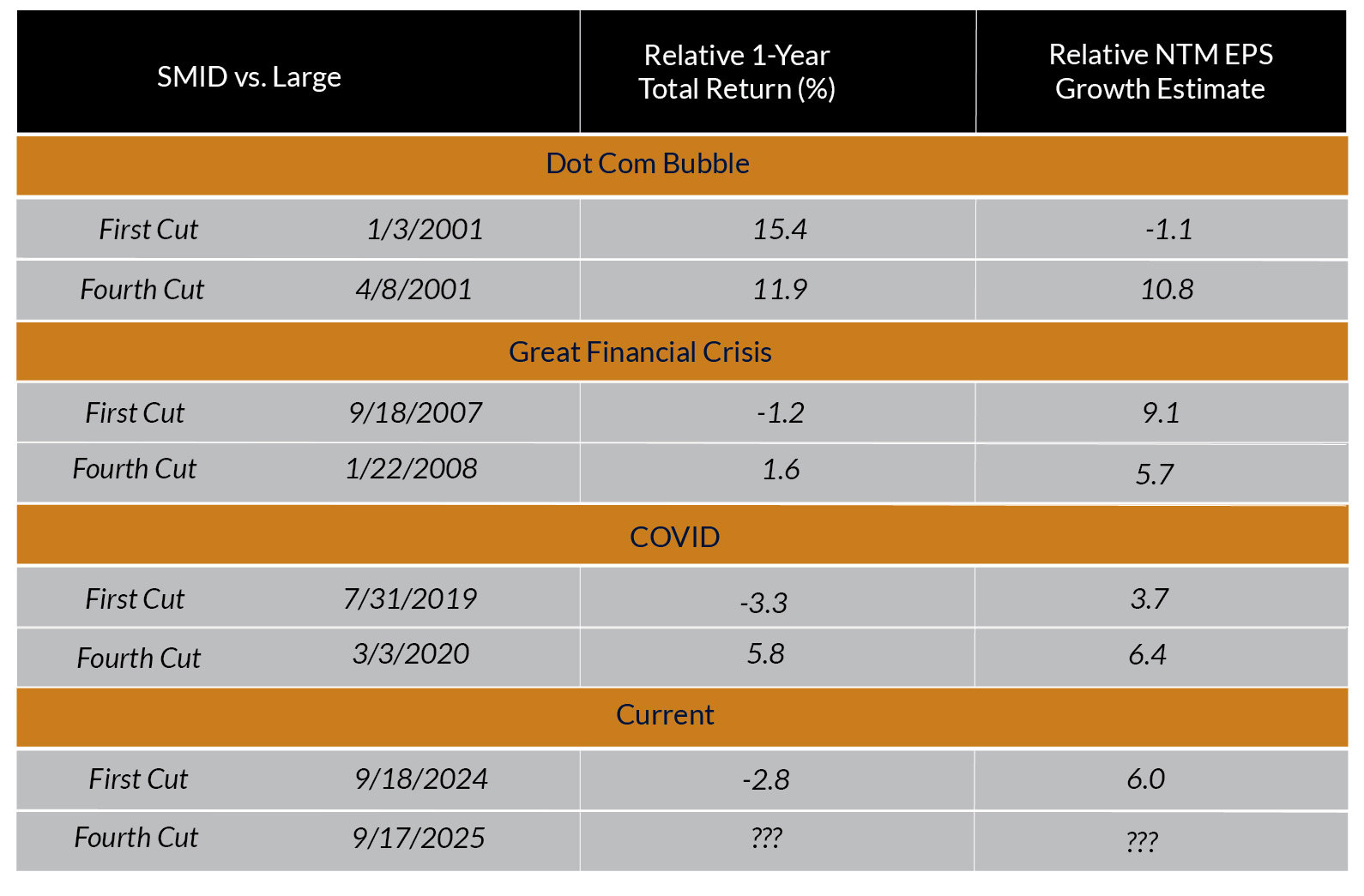
Note: Total return is the subsequent one-year total return differential between the Russell 2500 and the S&P 500 from the date of the rate cut. NTM EPS growth estimate is the FactSet consensus next-twelve-month eps growth estimate differential between the Russell 2500 and the S&P 500 at the date of the rate cut.
Source: Johnson Asset Management, FactSet, Data as of 8/31/2025.
This cycle has been unusual. The Fed cut rates three times in late 2024 but then paused due to concerns about the inflationary impact of fiscal and tariff policies from the incoming Trump administration. Now, with inflation risks appearing contained, the Fed has resumed the easing cycle. As a result, SMID cap stocks could deliver the relative earnings growth advantage that Next-Twelve-Month EPS estimates already suggest: +24% for the Russell 2500 vs. +10% for the S&P 500.
While tariffs remain a wildcard, today’s historically wide relative valuation discount for SMID Cap stocks offers a cushion not seen since 2001—helpful if markets deviate from the “typical” post-cut playbook.
Earnings Estimates Have Started to Turn Higher
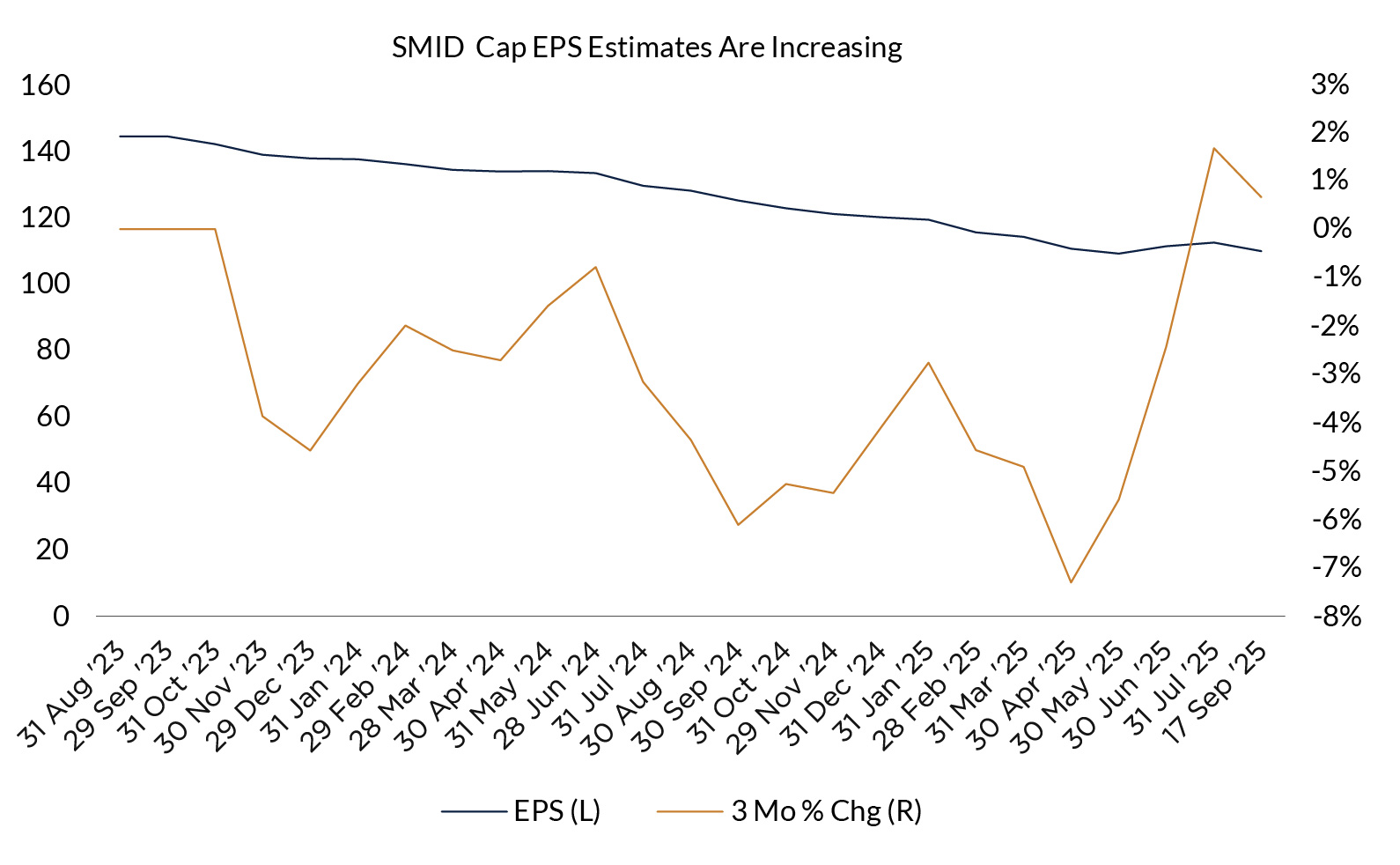
SMID cap earnings estimates have stabilized this earnings season and are now above May levels. Trade policy uncertainty from tariff announcements weighed heavily on forecasts earlier in the year, but recent negotiations have softened the impact of this global tax. Many companies are also proving adept at mitigating costs, while the AI boom is spurring stronger-than-normal capital spending plans.
Source: Johnson Asset Management, FactSet, Data as of 9/17/2025.
The fundamental backdrop will remain an important factor in considering the relative performance of SMID stocks vs. large cap. While the economy has avoided a hard landing in the current cycle, a convincing rebound in leading economic indicators will likely be required to further support SMID cap earnings and a longer-term rally.
Quality Still Matters
Correctly timed early-cycle calls can benefit small and SMID cap investors, and signs of such a shift are beginning to emerge. That said, no two rate-cut cycles are alike, and earnings forecasts should always be approached with caution. High-quality SMID-cap companies that wisely allocate capital, build strong and sustainable competitive positions, and maintain robust financial strength through business cycles will be well-positioned to benefit from a potential rotation toward smaller stocks, while also providing downside protection against unexpected market shifts.
Published 09/29/2025
Any expectations presented should not be taken as a guarantee or other assurance as to future results. Our opinions are a reflection of our best judgment at the time this presentation was created, and we disclaim any obligation to update or alter forward-looking statements as a result of new information, future events or otherwise. The material contained herein is based upon proprietary information and is provided purely for reference and as such is confidential and intended solely for those to whom it was provided by Johnson Asset Management. If you have any questions about our equity strategies and how we might tailor them to fit your investment objectives, please call 513.389.2770 or via email at info@johnsonasset.com.