
Are Cracks Emerging in the Labor Market?
We have an inside joke on our investment team: the most difficult part of being an economist isn’t understanding complex datasets or crafting a mosaic of reports and theories into a story. Rather, it is the massive and lagged data revisions that make forecasting feel nearly impossible at times. The data that is most vulnerable to revisions is also arguably the most important in determining whether we are in a recession or a normal economic environment: jobs data.
One of the largest market-moving reports is “The Employment Situation” report released by the Bureau of Labor Statistics (BLS) each month. This report compiles information on the health of the labor market from the results of two separate and unique surveys. The first survey, known as the “Establishment Survey”, polls businesses, while the “Household Survey” asks individuals about their job situation. Often times, the results of these surveys largely follow one another over longer time periods despite some month-to-month volatility. Over the past 6 months or so, however, the two surveys have diverged. The non-farm payrolls (NFP) number, taken from the Establishment Report, has continued to indicate above-average strength in the labor market adding a total of 1.529 million jobs over the past 6 months, whereas the Household Survey shows the economy has actually lost 783,000 jobs over the same time period. This has sparked controversy among researchers and economists on which series will ultimately be the correct market signal. Recent releases suggest that it may be the Establishment Survey that is susceptible to a large revision in the coming months to more closely align with the Household Report.
Approximately 5 months after the end of each quarter, the BLS releases another report called the “Quarterly Census of Employment and Wages (QCEW).” This is the most comprehensive employment report based on ~12 million firms and encompassing around 95% of all employment, compared to the ~660k sampled in the Establishment Survey. A subset of this QCEW data is called the “Business Employment Dynamics (BED)” report which is meant to be a comprehensive private payrolls measure in the form of net job gains/losses.
The recently released Business Employment Dynamics report showed that net job losses for the third quarter of 2023 were around -192k. In comparison, the non-farm payrolls number reported for the 3Q of 2023 was around +640k. This is a significant difference for two data series that have historically tracked one another closely (figure 1). This historically tight relationship is no coincidence, because the NFP number is benchmarked each year to the more comprehensive QCEW and BED data.
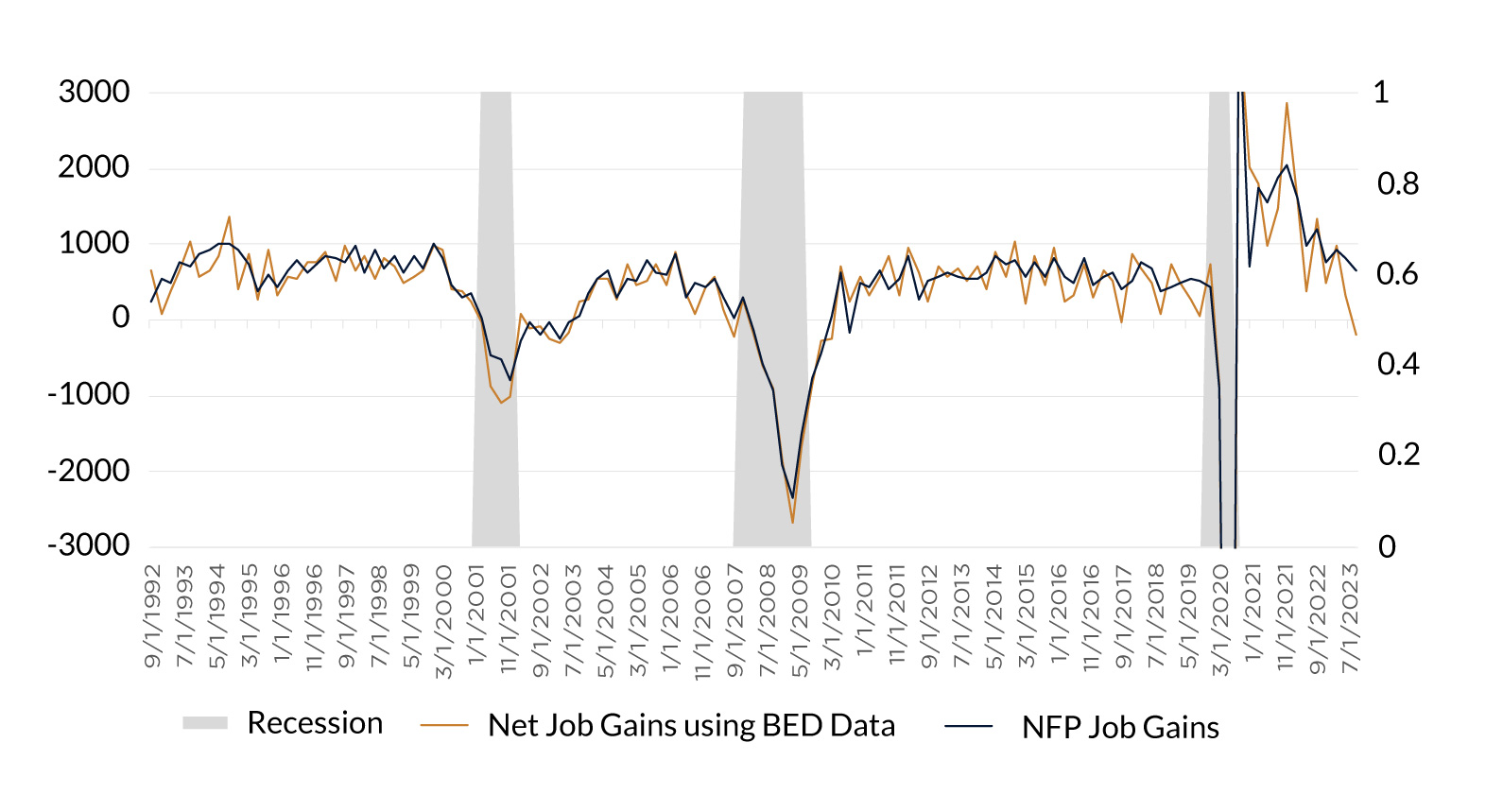
Figure 1. Source: Bureau of Labor Statistics and Bloomberg
The BLS applies seasonal adjustments to the Establishment Survey numbers, as well as an adjustment called “the birth-death model” which is meant to account for the creation and destruction of new businesses. As is the case with any sort of data adjustment, they are far from perfect and can cause incorrect signals, particularly at economic turning points. The QCEW data has indicated that the pace of establishment creation has moderated back toward pre-pandemic levels and trend. Whereas the birth/death model and assumptions being used by the BLS for the NFP calculation have continued to be elevated from their pre-covid trend lines (figure 2).
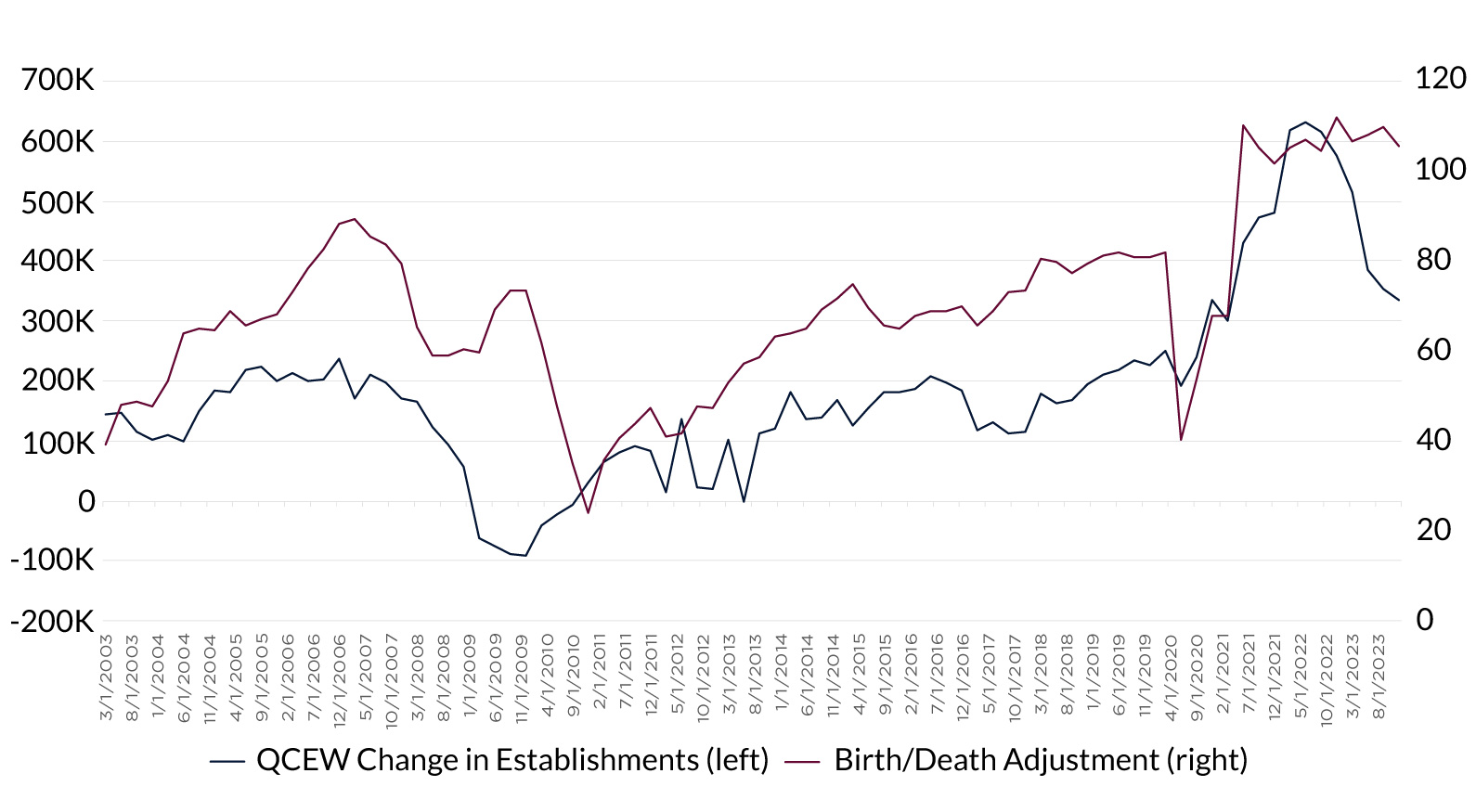
Figure 2. Source: Bureau of Labor Statistics and Bloomberg
Overall, this means that the BLS may be overcounting job creation through the birth/death model as well as their smaller Establishment Survey size. Both the lagged QCEW and BED reports imply that we may see more weakness in the NFP numbers for 2023 when they are re-benchmarked in early 2025.
Proponents for the strength of the Establishment Survey claim that it is better capturing the surge in immigration than the Household Survey. On the other hand, those that believe in the weakness of the Household Survey argue that the birth/death model used by the BLS is overestimating establishment payroll numbers. Maybe the truth of the labor market lies somewhere in the middle – not the blazing hot numbers suggested by the Establishment Survey, nor the recessionary readings of the Household Survey. However, the lagged revisions do increase the risks of policy error from the Fed as they likely think that the labor market is stronger than it is after revisions. By the time these revisions come to light, it can be too late for a pivot in monetary policy before an economic downturn. Only time will tell which dataset is right!
Published 06/25/2024
Any expectations presented should not be taken as a guarantee or other assurance as to future results. Our opinions are a reflection of our best judgment at the time this presentation was created, and we disclaim any obligation to update or alter forward-looking statements as a result of new information, future events or otherwise. The material contained herein is based upon proprietary information and is provided purely for reference and as such is confidential and intended solely for those to whom it was provided by Johnson Asset Management. If you have any questions about our fixed income strategies and how we might tailor them to fit your investment objectives, please call 513.389.2770 or via email at info@johnsonasset.com.